Clean Lines, Clear Message: Stationery for Modern Brands
There’s a certain power in simplicity. In a world saturated with noise, a brand that communicates with clarity and confidence stands out. It’s not about being loud; it’s about being precise. This is the philosophy behind the rise of clean, minimalist branding, and it’s a philosophy deeply embedded in the design of modern stationery templates. These aren't just pieces of paper with a logo slapped on; they are foundational design assets that shape how your audience perceives your business from the very first touchpoint.
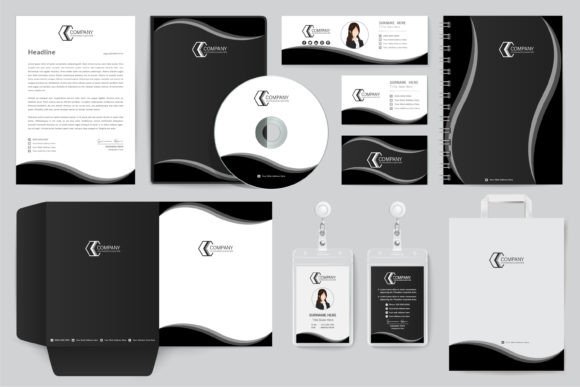
Think about the last time you received a beautifully designed invoice or a letterhead that felt substantial. It immediately signals professionalism and attention to detail. A well-crafted set of stationery templates for clean brands does exactly this. They provide a consistent visual language across every document—from proposals and invoices to letterheads and presentation covers. This consistency is the bedrock of a strong brand identity, making your business instantly recognizable and trustworthy. The goal isn't just to look good; it's to create a seamless, professional experience that builds recognition and reinforces your brand's core values at every interaction.
The Anatomy of a Clean Stationery Set
So, what defines a "clean" stationery template? It’s more than just using a lot of white space. It’s a deliberate design choice that prioritizes function and form in equal measure. Visually, these templates are characterized by a few key traits. You’ll often see a reliance on strong modern typography, favoring elegant sans serif fonts or refined serif fonts that offer excellent readability. The layouts are structured with a clear grid, creating a sense of order and calm. Color palettes are typically restrained, using one or two accent colors against a neutral background to guide the eye without overwhelming it.
The personality of such a design is one of quiet confidence. It doesn’t need flashy graphics or complex patterns to make a statement. Instead, it uses thoughtful spacing, precise alignment, and high-quality materials to convey a sense of premium quality. This style appeals to a broad audience—from tech startups and consultancy firms to lifestyle brands and creative agencies. It’s versatile because it acts as a sophisticated canvas, allowing your content to be the hero. The overall appeal is timeless; a clean design from five years ago still looks fresh today, ensuring your brand doesn't feel dated as trends come and go.
Where Clean Templates Shine: Beyond the Letterhead
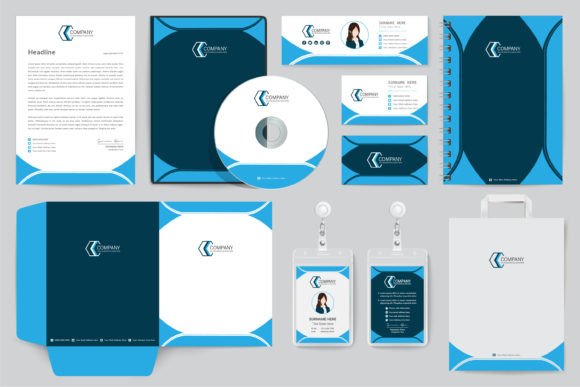
The true value of a comprehensive stationery set is its versatility. While the letterhead and invoice are staples, a modern business office stationery set design extends much further. Imagine a cohesive suite where your business card, presentation deck, proposal document, social media graphics, and even your email signature all speak the same visual language. This is where the power of organized layers and standard dimensions in a template file becomes invaluable. It allows for quick and easy customization, ensuring that whether you're creating a digital report or a printed brochure, the core brand elements remain consistent.
This consistency directly influences audience engagement. When a client receives a project brief that looks and feels identical to the invoice they paid and the website they visited, it builds subconscious trust. It tells a story of a detail-oriented, organized, and professional operation. For designers and marketers, having a library of these design assets is a game-changer. It streamlines the workflow, allowing you to produce high-quality branded materials for clients in a fraction of the time. For entrepreneurs and small business owners, it provides the tools to project the image of a much larger, established company, leveling the playing field in competitive markets.
Putting It Into Practice: Choosing and Using Your Templates
Selecting the right template set requires a practical eye. First, evaluate the project fit. Does the visual style of the templates align with your brand's personality? A set with very geometric, sharp lines might suit a fintech company, while one with softer curves and a warmer color palette could be perfect for a wellness brand. Look at the included styles. A robust package should offer more than just a letterhead; it should include variations for different document types to cover all your business needs.
Next, consider the technical specifications. The mention of "Competitor with Adobe Illustrations update versions" and AI/EPS files is crucial. This means the templates are built in industry-standard vector software, ensuring they are fully scalable without loss of quality—a non-negotiable for professional print and digital use. The use of free fonts is another practical benefit, eliminating additional licensing costs and making the templates accessible immediately. Test font pairings within the template. While the provided typeface is a starting point, see how it pairs with others you might use for headings or body text. The goal is to maintain a clear visual hierarchy that enhances readability.
Finally, think about the long-term application. How will these templates grow with your brand? A clean, well-organized file with properly labeled layers is a gift to your future self or any other designer who might work with your brand. It makes updates and adaptations simple. Whether you're creating a one-page flyer or a full editorial design for a catalog, the foundation is solid. By investing in a quality set of stationery templates, you're not just buying files; you're investing in a system for clear, consistent, and professional communication that strengthens your brand with every page you produce.